HEBREWS,
KNOW THE DAY.
KEEP THE APPOINTED TIMES.
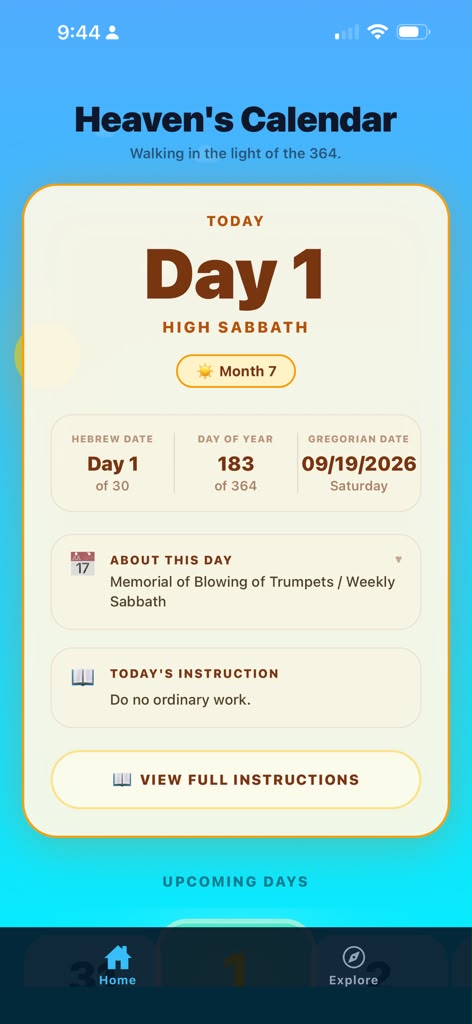
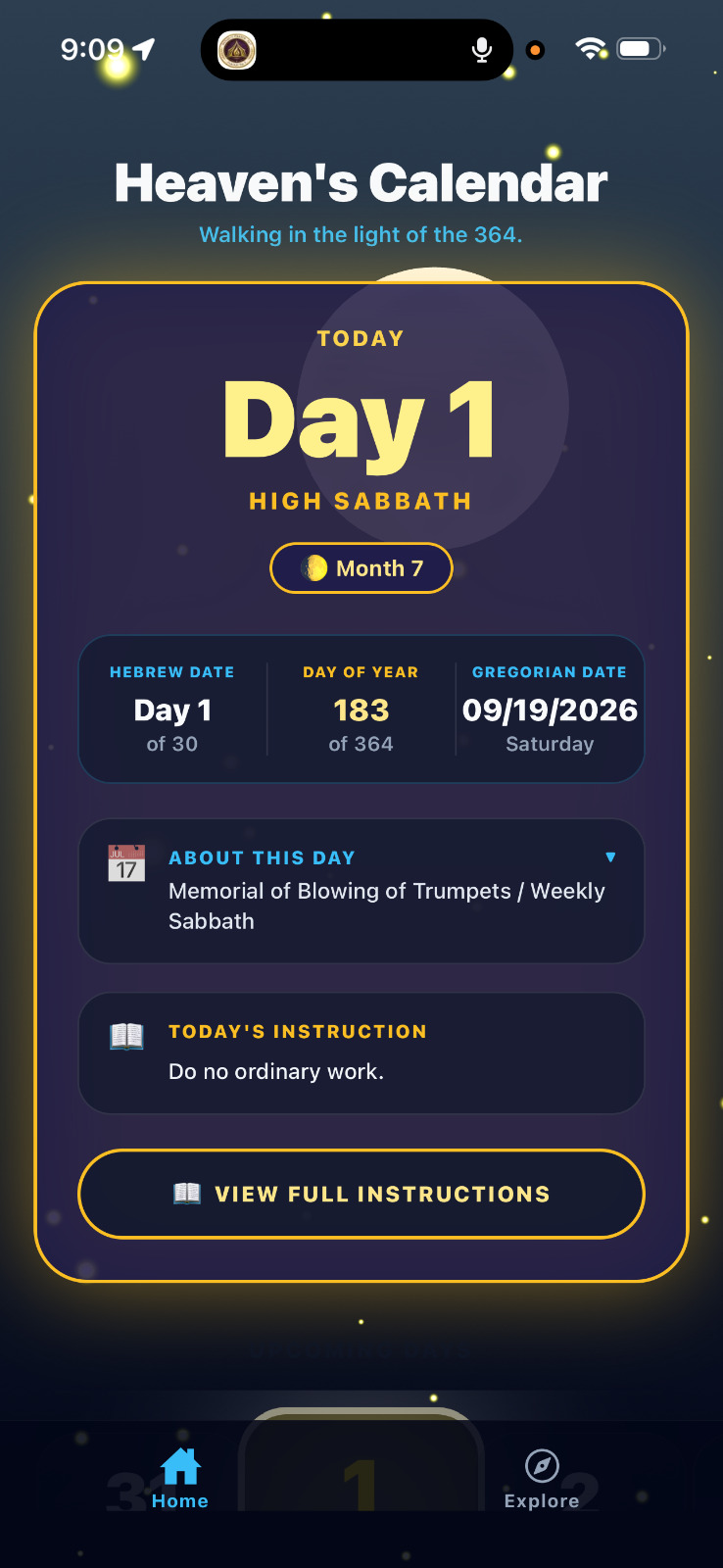
Heaven’s Calendar puts the restored biblical calendar in your hand—so you can know where we are in the year, what is appointed, and what the day requires.
FREE. NO ACCOUNT REQUIRED.
KEEP THE APPOINTED TIMES.
Heaven’s Calendar puts the restored biblical calendar in your hand—so you can know where we are in the year, what is appointed, and what the day requires.
FREE. NO ACCOUNT REQUIRED.


THE PROBLEM
We did the study so the calendar could become simple.
HOW IT WORKS
Every morning, Heaven’s Calendar answers the questions that matter.
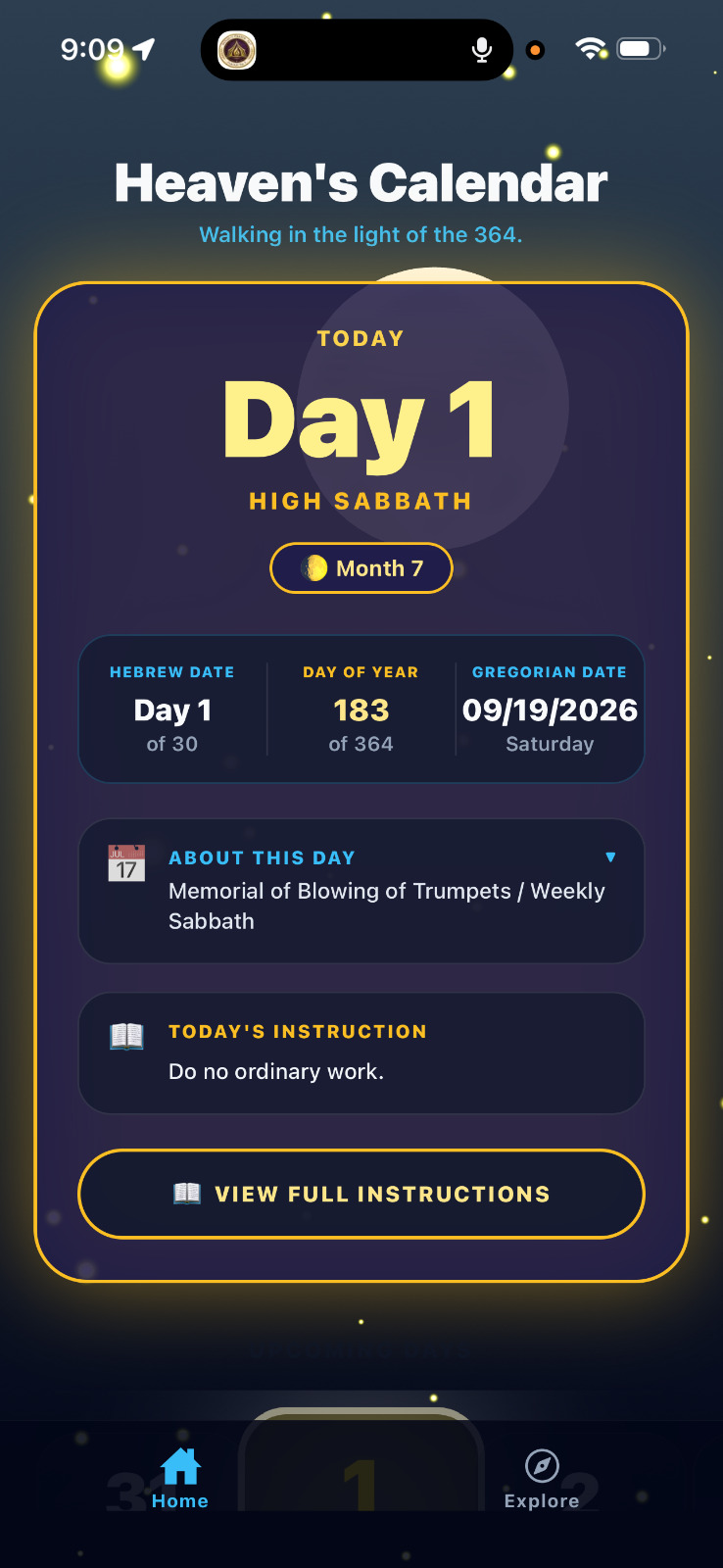
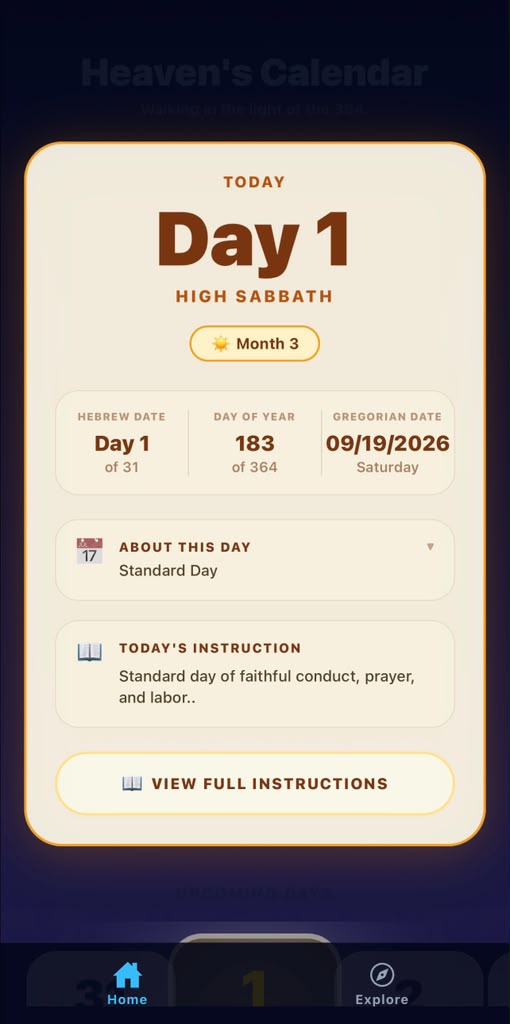
See your place in the restored year at a glance.
No calculating every morning.
See what is approaching before it arrives.
Heaven’s Calendar doesn’t simply give you a date.
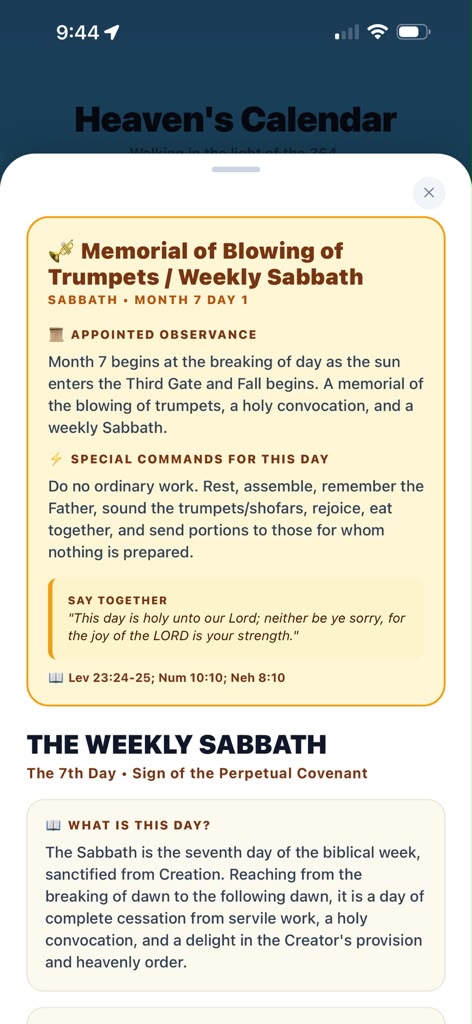
When instruction applies, tap into the day to see its meaning, preparation, instructions and Scriptural foundation.


See your place in the restored year at a glance.
No calculating every morning.

See what is approaching before it arrives.

Heaven’s Calendar doesn’t simply give you a date.
When instruction applies, tap into the day to see its meaning, preparation, instructions and Scriptural foundation.

Heaven’s Calendar turns the restored year into something you can live one day at a time.
FREE. NO ACCOUNT REQUIRED.
THE EVIDENCE
Heaven's Calendar wasn't built by starting with the calendar we expected to find.
We began with the witnesses.
Scripture first. Every claim tested. Every conclusion required to survive the witnesses.
What does the text actually say?
Follow the days, chronology, appointed times, months, seasons and year.
Traditional interpretations. Alternative interpretations. Ancient witnesses. Our own conclusions.
If a witness fails the test, it cannot carry the conclusion.
Heaven's Calendar tells you where you are, what is appointed, and what the day requires.
The study lets you examine how we got there.

FREE DIGITAL STUDY
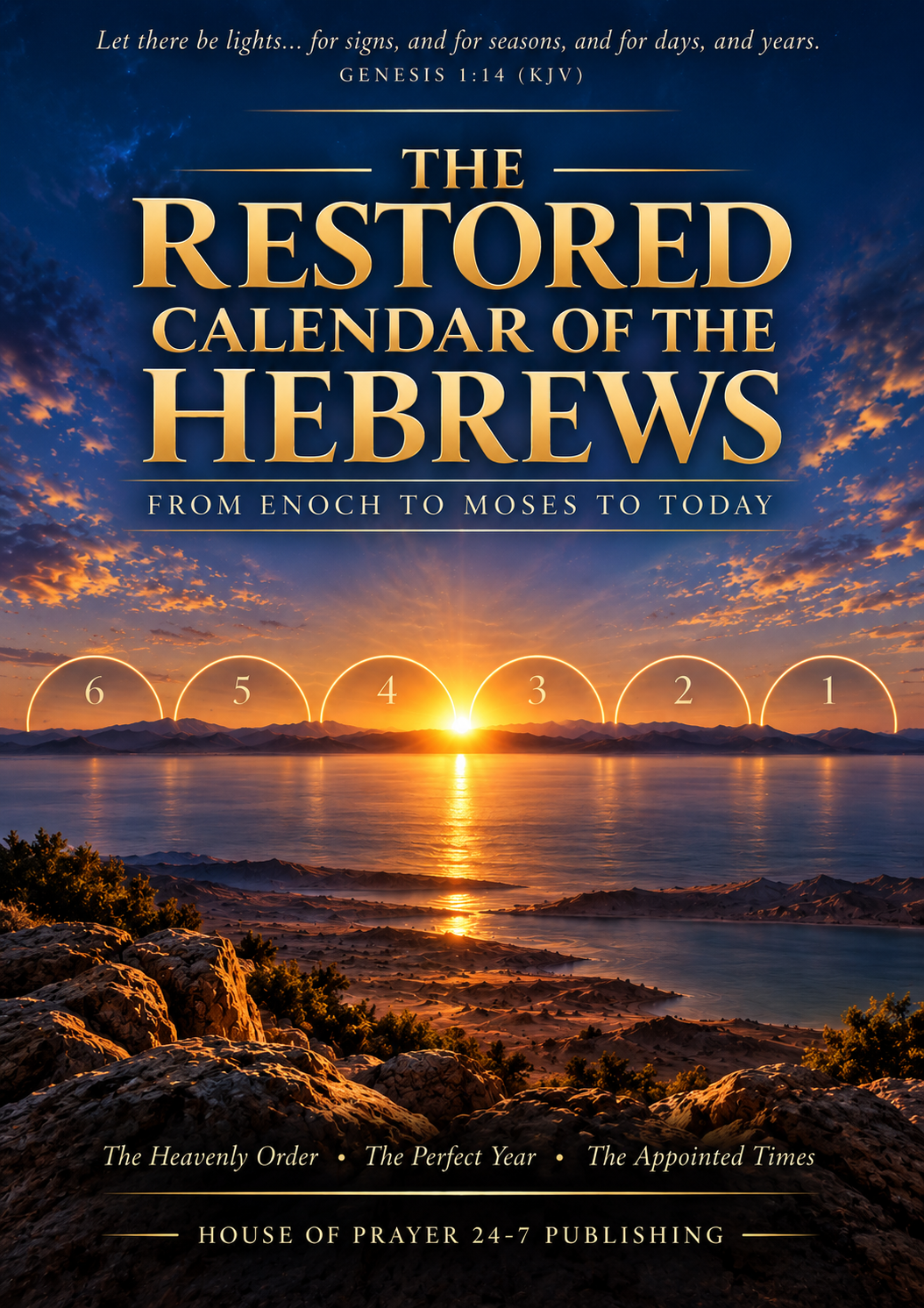
FROM ENOCH TO MOSES TO TODAY
Want to examine it for yourself?
The app tells you what day it is.
The study shows you how we got there.
Follow the investigation from the biblical day itself through the structure of the year, the 364-day reckoning, Sabbaths, seasons and appointed times.
Just want the calendar? Download Heaven's Calendar free.
QUESTIONS & ANSWERS
Don't accept the calendar because we say it is restored.
Examine the witnesses.
Test the claims.
Search the Scriptures.
The Restored Calendar of the Hebrews is a study of biblical timekeeping that seeks to reconstruct the calendar by following the witnesses preserved in Scripture and the ancient writings examined in the study.
Rather than beginning with a modern calendar and attempting to make the biblical appointed times fit it, the investigation begins with the heavenly lights, the course of the sun, the continuous seven-day count, and scriptural chronological anchors.
Its central question is simple:
What order do the witnesses themselves establish?
Because Enoch is an important witness to the heavenly architecture of the calendar, but the calendar is not presented as belonging to Enoch.
The investigation follows the witnesses from Enoch to Moses to today: Enoch describes the solar portals and yearly course; Torah establishes Sabbaths and appointed times; later biblical witnesses provide chronological anchors; and the observable heavens allow that order to be examined today.
The title therefore reflects the whole Hebrew calendrical system, rather than a single ancient witness.
The six portals are six regions along the eastern horizon through which Enoch describes the sun rising during its annual course. Corresponding portals are described in the west for its setting.
The study understands these as positions or regions of the solar course, rather than six literal physical doors in the sky.
The sun moves progressively through these regions as its rising and setting positions change throughout the year.
Because a portal does not equal one month.
The sun moves through the portals during its course in one direction and then returns through them as its course reverses. A portal can therefore participate in more than one portion of the twelve-month cycle.
For example, the calendar places the sun in the fourth portal at the beginning of the year and later observes its return through that region while traveling in the opposite direction.
For this reason, the portals are identified simply as 1–6, rather than permanently labeling each one with a particular season.
In the restored calendar, the beginning of the year is anchored to the observable course of the sun.
The year begins with the sun associated with the fourth portal, due east, at the balance of day and night. From that position, the sun proceeds northward and the length of daylight increases.
This gives the beginning of the year an observable heavenly anchor rather than an arbitrary civil date.
No. The restored calendar presented in this study is fundamentally solar.
Genesis 1:14 is foundational because the heavenly lights are appointed for signs, seasons, days, and years. The reconstruction particularly follows the measurable course of the sun through the year.
The appearance of a new moon does not restart the week or determine the Sabbath.
The Enochic calendrical system examined in the study describes a 364-day year.
The year is organized into a deliberate and repeating structure across its months and seasons, allowing the appointed times and continuous weekly count to be located within an ordered annual framework.
The study examines the textual witnesses behind that structure and how the 364-day reckoning is applied.
No.
The Sabbath follows a continuous seven-day count:
1 → 2 → 3 → 4 → 5 → 6 → 7
and then the count continues into the next seven-day cycle.
Months organize the year, but they do not interrupt or restart the weekly Sabbath count.
No.
Because the Sabbath follows an unbroken seven-day cycle, its numbered date within a month can change from one month to another.
A recurring pattern within one month should therefore not be mistaken for a rule requiring the Sabbath to occur on the same numbered dates every month.
The governing principle is the continuous seven-day count.
The study identifies the boundary of the biblical day with the breaking of day—the dawn/early-morning transition as darkness begins giving way to light—rather than sunset.
This conclusion comes from examining the sequence of biblical time markers rather than assuming the boundary beforehand. Judges 19, for example, presents a progression through:
DAY → EVENING → SUNSET → NIGHT → MORNING → DAWNING
The study also distinguishes between evidence showing the sequence of these periods and passages that explicitly identify the transition from one calendar day to another.
For that reason, the day boundary receives its own extended investigation.
Yes. That language is part of the evidence and should not be ignored.
The study distinguishes between Scripture mentioning evening and morning within the chronology of a day and Scripture explicitly declaring that evening is the moment a new calendar day begins.
The method is straightforward:
“Where Scripture speaks, we follow it. Where Scripture does not speak, we do not speak for it.”
For that reason, the day-boundary question is examined across the biblical witnesses rather than being settled by one phrase alone.
The study does not require Enoch to carry the same authority as Scripture.
Scripture remains the foundation.
Enoch contributes important calendrical architecture, while other ancient writings can provide comparative chronological evidence.
Each witness is considered according to its role rather than treating every source as identical in authority.
The invitation throughout the study remains the same:
Test the claims against the witnesses.
The appointed times are located according to their scriptural month-and-day designations.
For example, Torah identifies Passover with the 14th day of the first month and the Feast of Unleavened Bread beginning on the 15th day.
The calendar therefore first establishes the year, month, and continuous day count.
The appointed times can then be located within that framework rather than being independently assigned dates from the Gregorian calendar.
You shouldn't accept the calendar merely because of its title, its authors, or the confidence with which it is presented.
Test it.
Examine its claims against Scripture.
Examine the heavenly order.
Examine the ancient witnesses being cited.
Examine whether the resulting system remains internally consistent.
The question is not simply:
“Who teaches this calendar?”
The better question is:
“Can its claims survive examination?”
The study and the Heaven's Calendar app serve two complementary purposes.
The study explains why the calendar is constructed as it is—the solar course, six portals, beginning of the year, months, continuous Sabbath count, appointed times, and breaking of day.
Heaven's Calendar answers the practical daily question:
“Where are we today, what is appointed, and what does this day require of me?”
That relationship is simple:
THE STUDY TEACHES THE ORDER.
THE HEAVENS ESTABLISH THE WITNESS.
HEAVEN'S CALENDAR HELPS YOU WALK IN IT.
STILL HAVE QUESTIONS?
The app was built to make the calendar simple.
The study was written so you can examine how we got there.
HEAVEN’S CALENDAR
Heaven’s Calendar puts the restored year in your hand—one day, one appointed time, one instruction at a time.
FREE. NO ACCOUNT REQUIRED.
Want to understand the research first?
THE RESTORED CALENDAR OF THE HEBREWS
FROM ENOCH TO MOSES TO TODAY
READ THE FREE STUDY